

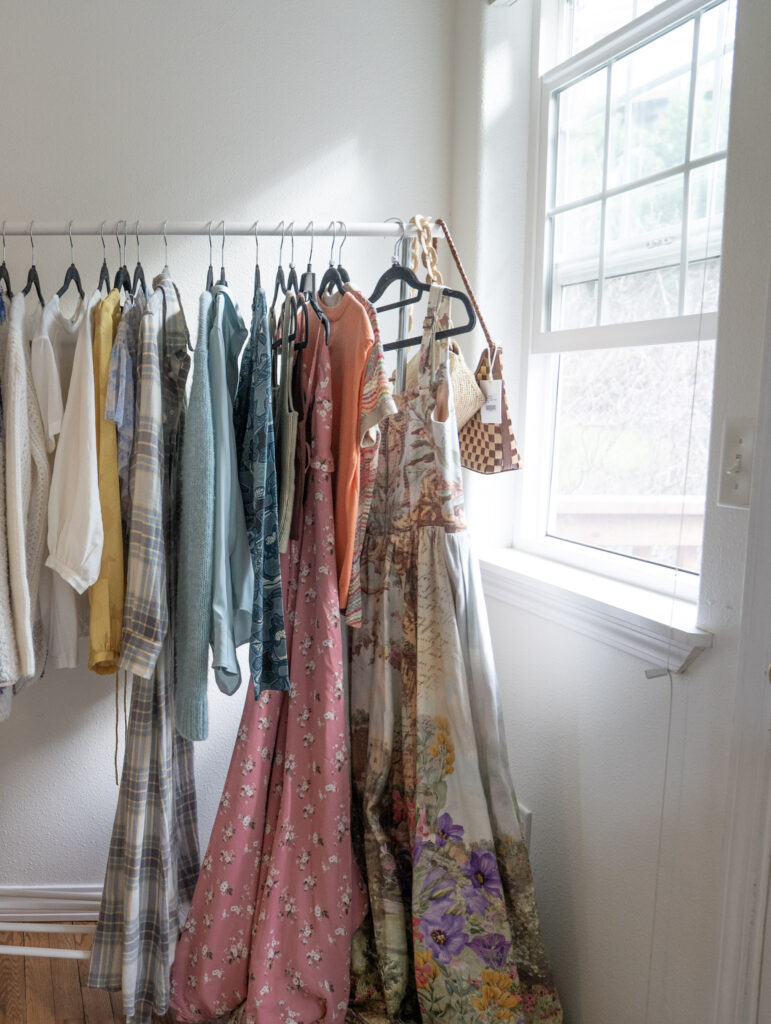
A real breakdown of resale options from someone who’s been doing this for over 20 years.
What is your end goal? Go here..
If you’ve ever stood in front of a pile of clothes and thought, “Where do I even take this?“
You’re not alone.
I started my first resale business at eight years old, selling used golf balls out of my parents’ yard on a golf course. I didn’t know it then, but I was stepping into something I would spend the next two decades immersed in. I’ve watched resale grow from a single platform into an entire ecosystem, and I’ve tested almost every version of it along the way.

Here’s the truth no one really says clearly enough:
There are more ways than ever to sell your clothes, and more ways than ever to be disappointed by it. That’s especially true here in Portland, Oregon, where style, quality, and curation actually matter.
Why Selling Clothes in Portland Feels Different
Portland doesn’t shop like the internet. There’s a quieter, casual, comfortable, more intentional lens here. People pay attention to fabric, to how something feels on the body, to whether it looks like it belongs in their life. It’s less about logos and more about presence.
That changes how you’re clothing sells.
Something that gets attention online might sit locally, and something overlooked online might sell immediately in a Portland consignment store. You’re not just choosing where to list an item. You’re choosing the audience, the pricing strategy, and the environment it lives in.

Before You Choose, be Honest About What You Want
This is the part people skip, and it’s why they end up frustrated.
Every resale option is a trade-off. You’re balancing time, money, effort, and control. If you want the highest possible payout, you’ll usually be doing the most work. If you want ease, you’ll almost always make less. If you want something balanced, you’ll need to let go of control in certain areas.
There isn’t a perfect system. There’s just the one that fits your life right now.
Selling it Yourself: Control Comes at a Cost
Platforms like Poshmark, Depop, and eBay are where most people start. On paper, they look like the best option. You keep the majority of the sale. You decide the price. You control how your item is presented.
And all of that is true.
But what’s also true is that you become the entire operation. You’re taking photos, writing descriptions, answering messages, negotiating offers, packaging orders, and handling the unexpected. It doesn’t stop when you’re tired or busy. It runs alongside your life.
For some people, that’s energizing. There’s a rhythm to it that can feel rewarding. For others, especially people who already have full lives, it quietly becomes another job they didn’t mean to take on. For the purposes of this blog post I listed 5 items of my own closet on my Poshmark. That was 2 months ago and one has sold.

Sending it in: Convience with Trade-Offs
The next layer is the send-it-in model. The RealReal and ThredUp both operate here, and they offer something that sounds incredibly appealing. You send your items, and they take care of the rest.
There’s a reason this model has grown so quickly.
But this is also where expectations and reality tend to separate the most.
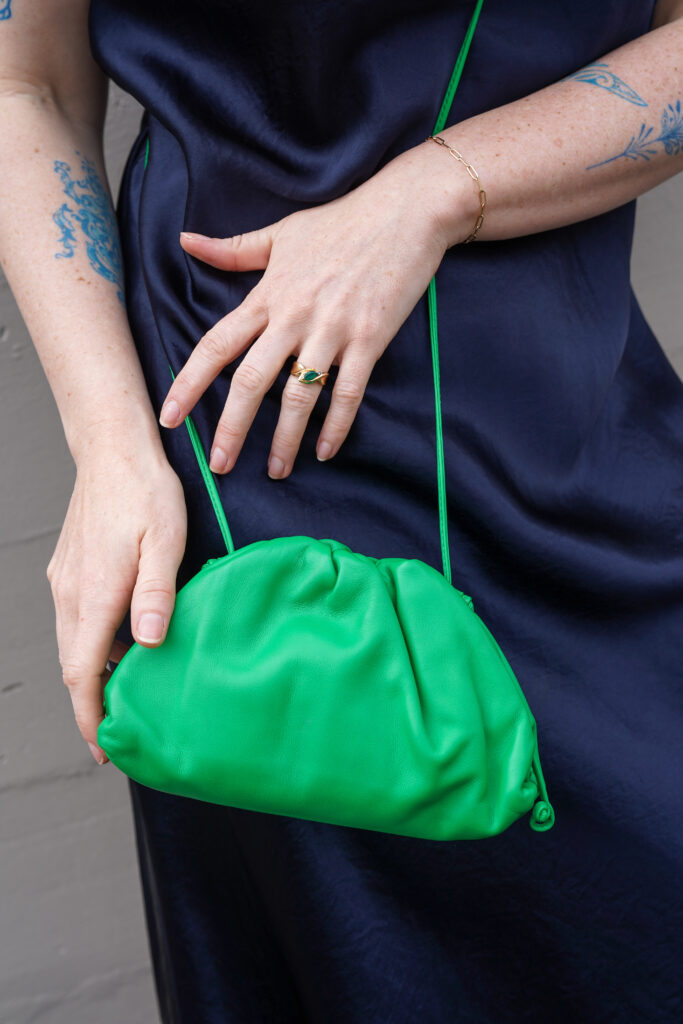
With The RealReal, the experience can be strong for certain categories. Luxury bags, jewelry, and highly in-demand designers tend to perform well. Clothing is where things get less predictable. They also have authentication issues. Just last week I purchased a blazer that I knew was a replica of one of one of my favorite brands immediately.
I had a consignor bring in a new-with-tags Gucci coat that retailed for over two thousand dollars. It didn’t move in-store, so we suggested she try The RealReal. It was returned four times. Each time it came back, it was relisted at a lower price. By the time it finally sold, it was the start of summer and the coat had been discounted close to seventy percent.
That’s not an unusual story.
Because The RealReal allows returns, items can cycle through multiple buyers, and each return chips away at the perceived value. The system is built to move inventory, not to preserve what something once meant or cost.
It’s also important to understand that The RealReal operates at scale. When you’re processing that volume, things get missed. Items can be mis-tagged, mislabeled, or priced without full context. That doesn’t mean it’s a bad platform. It just means it’s a large system, and large systems don’t always move with precision.
You’ll see that reflected if you spend any time reading reviews. There are consistent mentions of pricing surprises, communication issues, and frustration around payouts. That doesn’t define every experience, but it’s part of the landscape.
ThredUp takes convenience even further. It’s the easiest option available. You send a bag and you’re done.
But the simplicity comes with a different kind of reality. Payouts are often very low, sometimes just a few dollars per item, and occasionally less than a dollar. There are also processing fees, and if you want your unsold items back, you’ll pay for shipping plus an additional fee per piece.
That part catches people off guard.
It’s not that ThredUp doesn’t work. It does exactly what it promises. It clears space. But it’s not a strong strategy if your goal is to make meaningful money from your clothing.

Consignment in Portland: A More Human System
Consignment sits in a different space. It’s slower, more personal, and often misunderstood.
When you bring items into a consignment store in Portland, you’re stepping into a curated environment. The store has a specific point of view. A specific customer. A specific way of presenting things.
That’s the value.
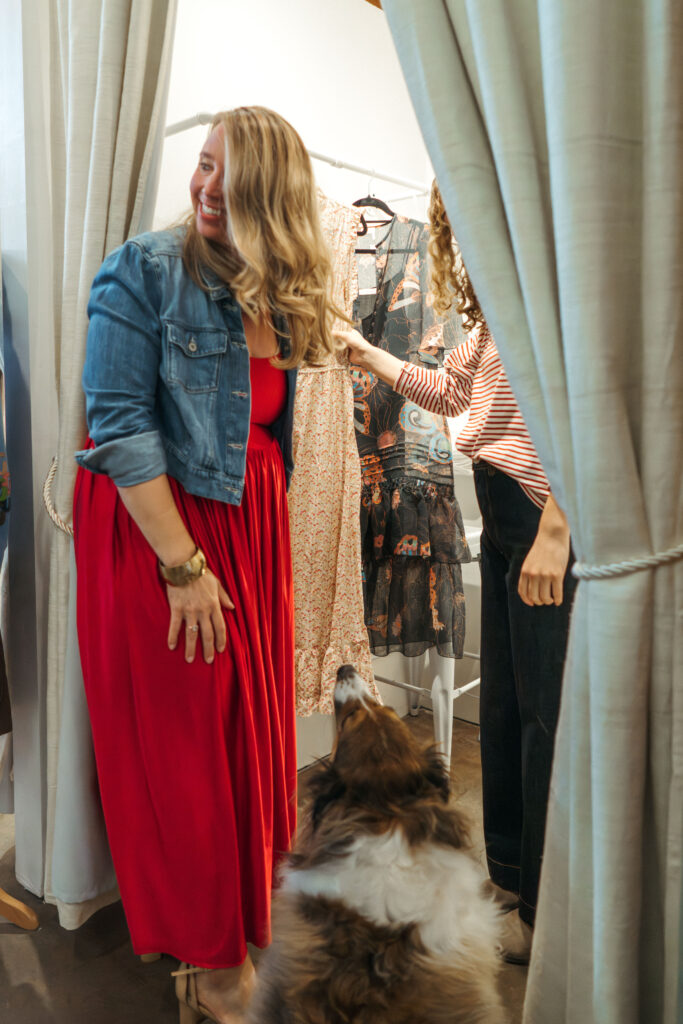
Your items are not just listed. They’re considered, styled, and placed into a larger story. Customers can touch them, try them on, and connect with them in a way that doesn’t happen online. Because of that, stores can often price items higher than what those same pieces eventually sell for after multiple rounds of online discounting.
But this model only works if you understand what it asks of you.
Consignment is not passive. It’s a partnership.
Not everything will be accepted, and that can feel personal if you’re not prepared for it. You chose the item. You liked it. Being told it doesn’t fit a store can land harder than expected.
It helps to understand that the team behind that decision is trained. They’re not guessing. They’re looking at what sells, what their customer responds to, and what will move within a specific time frame. They are making decisions based on experience and data, even if it feels subjective in the moment.
There’s also a logistical side that people often overlook. Most consignment stores run on a sixty to ninety day cycle. If your items don’t sell, you’re responsible for picking them up. Many stores will not call you. You need to know your dates and follow through.
This is one of the biggest misconceptions about consignment. It’s not drop-and-forget. It’s bring, trust, track, and participate.
Why It All Feels So Confusing
One of the most common questions I hear is, “What are you looking for?”
And I understand why people ask it. It feels like there should be a clear answer.
But the reality is, there isn’t a clean, universal definition. You’ll hear words like modern, high quality, cool. None of them fully explain it.
Because what stores are really responding to is that intangible thing. The piece that fits their customer, their timing, their space. That’s why something can be turned down in one store and sell immediately in another. That’s not inconsistency. That’s curation.
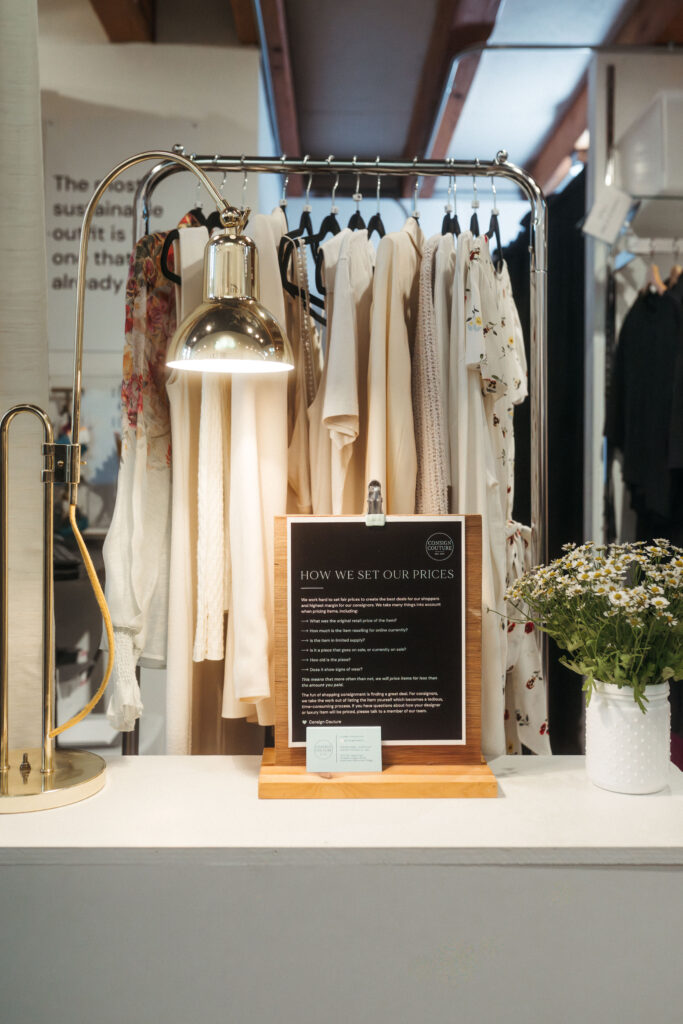
What I Actually Think After Doing This For So Long
I resell constantly. I thrift weekly. I study what sells and why. This is both my profession and something I genuinely enjoy. Most people are not wired that way. Most people are busy. They want simplicity. They want to make a good decision and move on. And that’s why understanding these systems matters.
If you enjoy the process and you have the time, selling your own items can absolutely be worth it. If you’re working with currently trending true luxury pieces, The RealReal can be a strategic choice. If your goal is to clear space quickly and you’re not attached to the outcome, ThredUp is an easy path. But if you’re looking for something that balances return, effort, and experience, consignment, especially in a city like Portland, remains one of the most grounded options.
Final Thought
We’ve shifted into a world where you can get almost anything instantly. It shows up at your door within hours, and there’s very little connection to it. Resale changes that. It slows you down. It makes you look. It gives you the experience of finding something instead of just receiving it. The truth is, we already have enough clothing in the world to last for generations. We don’t need more. We need better ways to move what already exists. And whether you choose to sell online or through a consignment store in Portland, the goal is the same. To keep things in motion. To let them be used again. To create a system where value doesn’t disappear the second something leaves your closet. That’s the part that actually matters.
Secondhand Forever,
Tamara


*Edited with help from my very intelligent team and husband. Without them, my grammar would have made this piece unintelligible.

